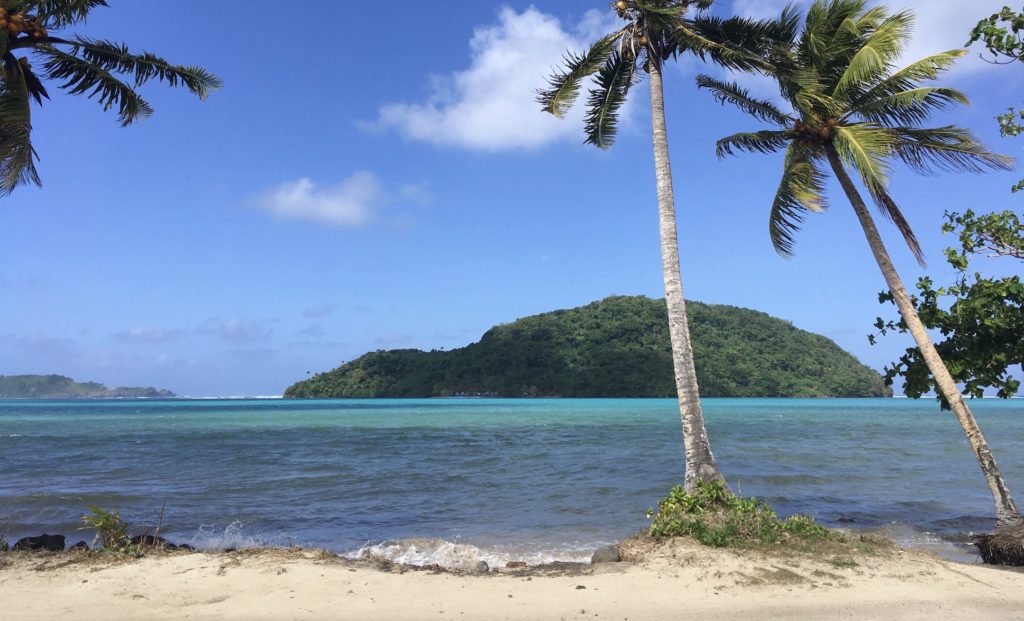
Samoa (officially the Independent State of Samoa) is an island nation in the South Pacific, located approximately 7,600 kilometers southeast of Japan. Traveling via New Zealand, it takes about 20 hours by plane to reach the country. Samoa consists of nine islands of varying sizes and has a land area about 1.3 times that of Tokyo, with a population of approximately 200,000 people.
The official languages are Samoan and English, though Samoan is more commonly used in everyday life. In Japan, Samoa became widely known in 1961 when the song “The Song of Samoa Island” was featured on NHK’s Minna no Uta, introducing a Polynesian folk melody with Japanese lyrics. Samoa has a tropical climate with warm weather year-round, and Christianity is the predominant religion.
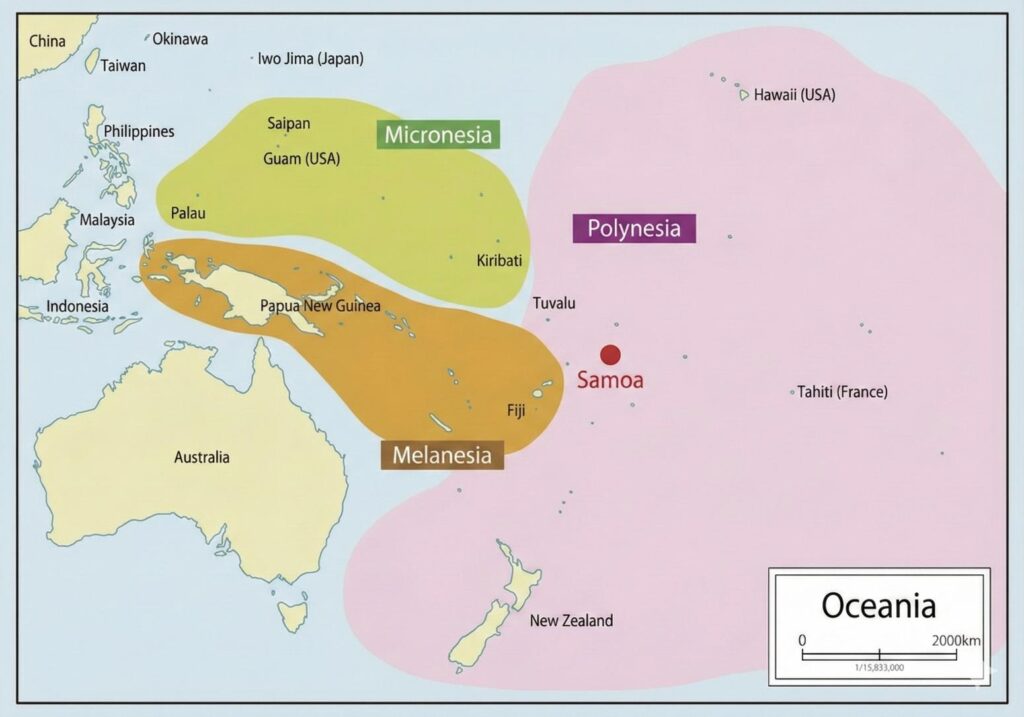
Within the South Pacific region, Samoa is classified as part of Polynesia, sharing cultural roots with Hawaii, Tonga, Tahiti, and the Māori people of New Zealand. Samoa is considered one of the birthplaces of Polynesian culture, and many traditional practices—such as dynamic dance styles and the umu, a method of cooking using heated stones—remain deeply rooted in everyday life today.